When The Tool Becomes The Master

There once was a man in a village where everyone used a rock to beat nails into boards. They knew no better. This man devised a labor-saving device that we call the hammer. Immediately, the village saw the benefit in constructing shelter by using a hammer instead a rock. The man who devised the instrument was immediately rewarded with fame and financial success.
Something else occurred: the tool he created quickly became his master. Villager after villager began demanding a house built with this new instrument. The man became a slave to the onslaught of industry which sprung from his singular invention.
This man, once free to use a rock to drive a nail, had now become a slave to his own creation.
Thus, we are prone to becoming slaves to our labor-saving devices. There is a moment in which the arc of utility begins a negative descent instead of a positive ascent. At that point, the user becomes the used. So it is with AI (artificial intelligence).
This heady article, written by Clayton Chancey for the Gospel Coalition, explores how AI threatens, not only to enslave us, but to do so while promising us transcendent benefits such as (1) the possibility of an artificial body that can hold our consciousness [transhumanism], (2) a superintelligence that can solve all of our problems [rationalism], and (3) a better trajectory of human history [longtermism]. You can access the full article by clicking --> here <--
Chancey compares the goals of the humanist - the ones developing AI abillities with a religious fervor - to the fool trying to “dig himself to heaven.” They are headed in the wrong direction! He makes the case that their goals are perfectly met in Christ.
(1) He is the God of the Kingdom that is both here, and yet to come. There is a utopia!
(2) Superintelligence is found in Christ alone, our Creator.
... in whom are hidden all the treasures of wisdom and knowledge. (Col 2:3)
(3) Sickness, disease, and death are all defeated in the resurrection.
For this perishable body must put on the imperishable, and this mortal body must put on immortality. (1 Cor 15:53)
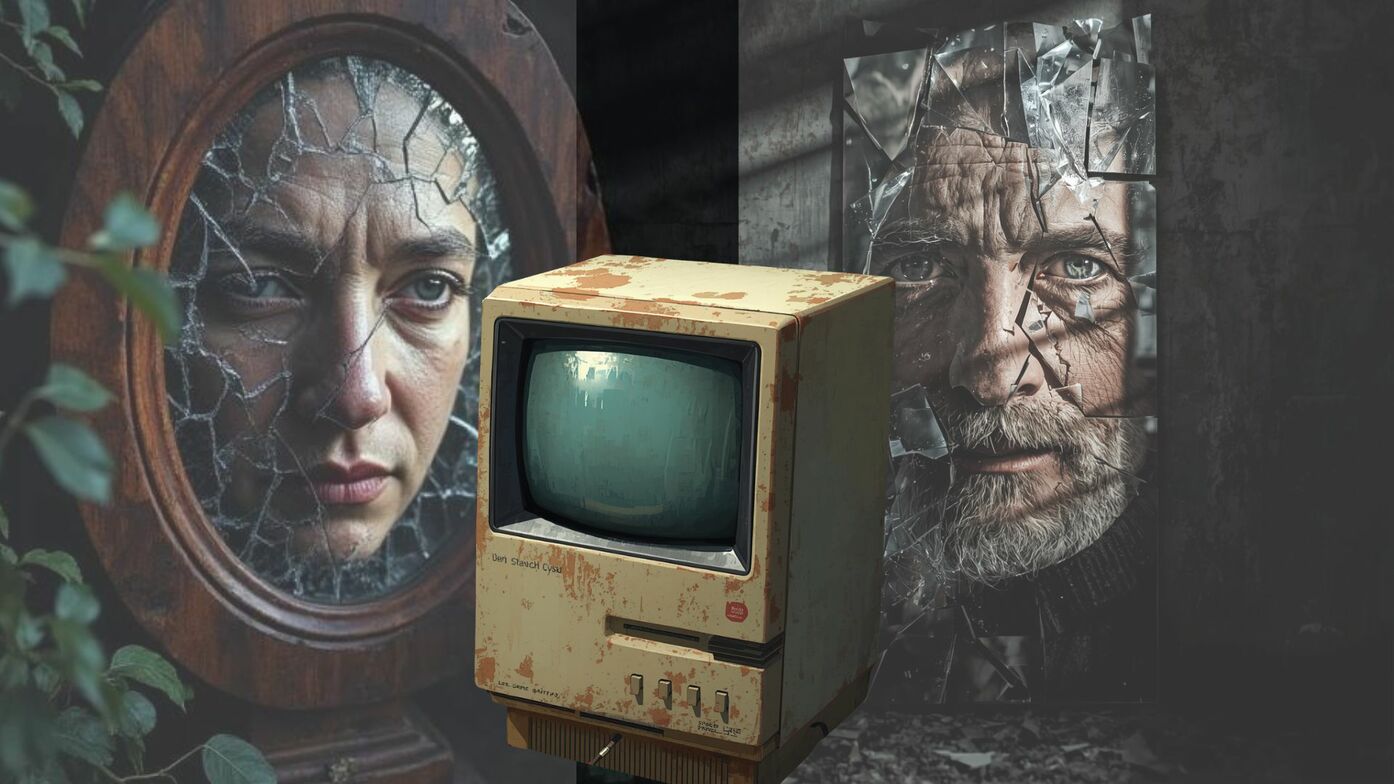
At a theological level, we are all created in God’s image. That is why we use the term imago Dei. Our bearing of God’s image has been fractured by sin. Even after the fall from the Garden of Eden in Genesis 3, we remain image bearers, even though our mirrored reflection of God is broken and marred.
We are imperfect reflections of our perfect creator. When we, the imperfect reflections, attempt to create, we make something that also bears this broken image. In fact, the things we create – art, poetry, technology, plans – are all one step removed from our broken image, since they were made by us. They all bear the brokenness that we bear. Therefore, our creations are all broken images of a broken image.
When we see beauty in our created things, even when we think those creations transcend our beauty, we are seeing an image that is an imago hominis – a reflection of fallen imperfect man. As Chancey puts it:
No imago hominis, however sophisticated, can provide what only the imago Dei can offer.
I would amend his statement slightly: No imago hominis can ever provide what only God can offer. The best that AI can do for us is improve our condition in the manner that a new tool can. It can never give us eternal life, heaven, or solve the problems and entanglements of the individual human heart. On the contrary, AI has the potential to make lives worse by misdirecting our drifting hearts and desires!
Our job, therefore, is to keep AI in its place. It is not our Lord – we should never serve it. It is not our savior – nor could it ever be. It is not our therapist or guru – only God’s Word can enlighten our soul and heal the problems of our soul. It cannot be truly alive – it can only be mechanically animated.
May our words and life point others to the real solution for the real problems in this life. May we be an arrow pointing to heaven.